
The Columbus Insane Asylum
Before the Hilltop became what it is today, this area was home to one of the most significant and unsettling institutions in Columbus history. The Columbus Insane Asylum once stood as both a place of treatment and tragedy, shaping the land in ways most people driving through today would never realize. Now, it exists more as a shadow of the past, a forgotten point of interest layered beneath modern development, but still very much part of the Hilltop’s story.
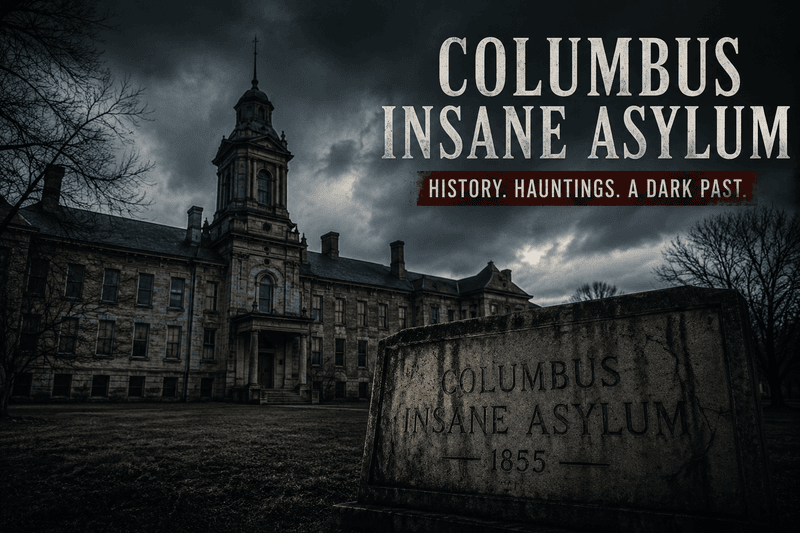
From Reform to Ruin: The Rise and Fall of the Columbus Insane Asylum
The Columbus Insane Asylum was established in the mid-1800s during a time when mental health reform was gaining traction across the United States. Designed under the Kirkbride Plan, the facility was meant to provide humane treatment through structure, light, and order. At the time, it represented progress, a belief that environment and care could restore people rather than simply confine them.
But like many institutions of its kind, that vision didn’t last. As patient populations grew, the asylum became overcrowded and underfunded. What was once intended as a place of healing gradually shifted into a place of containment. Reports of neglect, poor conditions, and questionable treatment methods began to surface, reflecting a broader failure in the system rather than just one facility.
By the late 20th century, the asylum was eventually closed and demolished, leaving behind little physical evidence of what once stood there. Today, the land has been redeveloped, but the history remains embedded in the Hilltop. It’s one of those places where the past hasn’t disappeared, it’s just been built over.
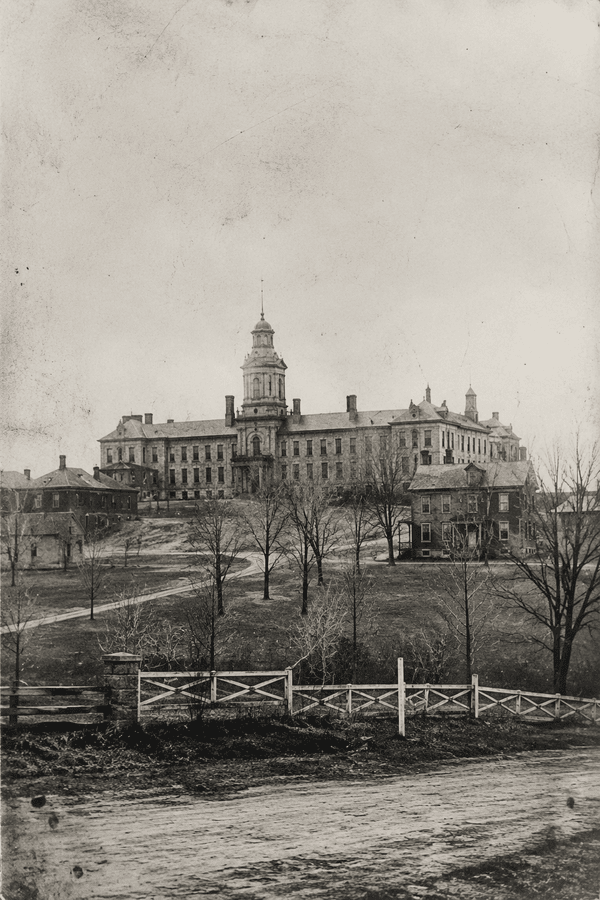
Who’s Who: Notable Figures of the Columbus Insane Asylum
Behind the walls of the Columbus Insane Asylum were not just patients, but doctors, reformers, and individuals whose stories shaped its legacy. Some were pioneers of early mental health treatment, while others became part of the asylum’s darker history. These are the names and roles that help put a human face to a place often remembered only for its reputation.
Dr. Nathan B. Sizer (Superintendent)
One of the early superintendents of the asylum, Dr. Sizer was responsible for overseeing operations during a time when the Kirkbride model was still being implemented. His role reflected the original intent of the institution was to provide structured, humane care, though like many administrators, he also faced the challenges of overcrowding and limited resources.
Dr. William Awl (Physician & Reformer)
Dr. Awl was a well-known figure in Ohio’s early mental health reform movement and played a role in shaping the philosophy behind institutions like the Columbus Insane Asylum. He advocated for more humane treatment of patients at a time when mental illness was poorly understood and often stigmatized.
Margaret Schilling (Patient)
One of the most well-known stories associated with the asylum, Margaret Schilling was a patient who went missing within the facility in the late 1970s. Weeks later, her body was discovered in a sealed-off area of the building. The outline of her body reportedly stained the floor and became one of the most talked about and unsettling urban legends tied to the site.
Unnamed Patients (The Forgotten Population)
While a few names have surfaced over time, the vast majority of those who lived and died at the asylum remain unknown. Many were admitted for reasons that today would not even be considered mental illness, including poverty, grief, or social nonconformity. Their stories are largely lost, but they represent the true scale and impact of the institution.
Staff & Caretakers
Beyond the physicians, there were countless nurses, attendants, and workers who kept the asylum running day to day. Some were dedicated to patient care, while others operated within a system that became increasingly strained. Their experiences rarely documented in detail were shaped by the same conditions that affected the patients themselves.
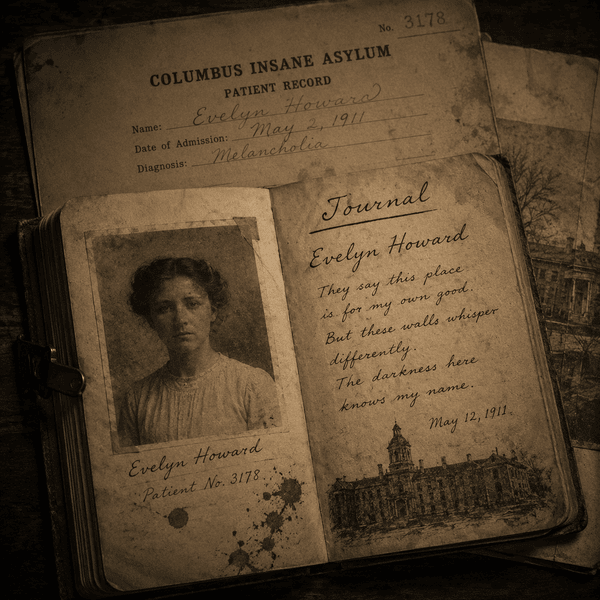
Evelyn Howard: The Mystery of the Asylum Patient’s Journal
One of the more mysterious stories connected to asylum history is the alleged journal of a patient named Evelyn Howard. According to the account, the journal detailed the thoughts, fears, and daily experiences of a woman confined within the institution, offering a rare first-person glimpse into life inside an asylum. Whether every detail is historically verified or partially shaped by legend, the story has become part of the darker folklore surrounding old psychiatric hospitals and forgotten patients.
What makes the journal compelling is how personal it feels. Instead of focusing on doctors or administrators, it shifts the perspective to the patients themselves, the people often erased from official records. The writings describe isolation, confusion, fear, and the unsettling atmosphere of institutional life, themes echoed in many real historical asylum accounts throughout the 1920’s.
Stories like Evelyn Howard’s resonate because they blur the line between documented history and urban legend. Whether fully authentic, partially reconstructed, or inspired by broader asylum history, the journal represents the countless voices that were never preserved. In many ways, that uncertainty is what makes the story so haunting.
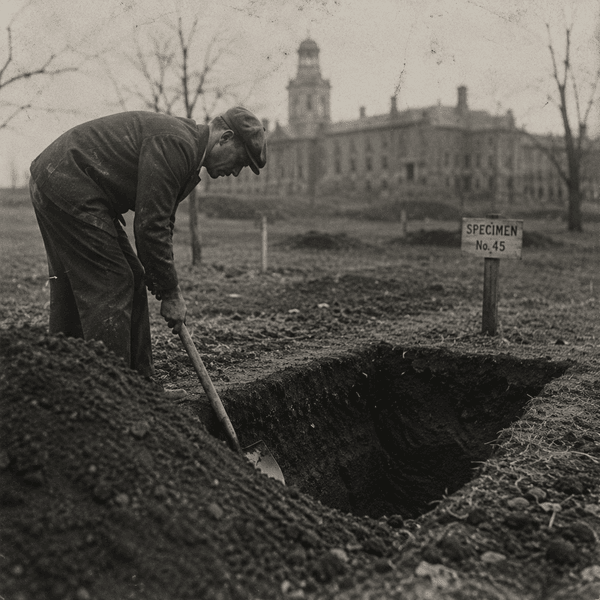
The Insane Cemetery: The “Specimens” of the Hilltop
Not far from where the asylum once stood lies one of the most unsettling remnants of its history, often referred to as the “Insane Cemetery.” Unlike traditional graveyards marked with names, dates, and family ties, many of the graves here were labeled in a far more clinical and dehumanizing way. Instead of identities, some markers were simply inscribed with numbers or the word “Specimens,” reducing individuals to case studies rather than people.
This wasn’t entirely unusual for institutions of that era. Patients who died without family, funds, or recognition were often buried anonymously, their identities recorded only in internal logs that may no longer exist. The use of terms like “Specimens” reflects how mental health patients were sometimes viewed at the time were not as individuals with stories, but as subjects to be observed, documented, and categorized.
Today, the cemetery stands as a stark reminder of that mindset. It’s quiet, largely overlooked, and easy to pass by without realizing what it represents. But for those who know its history, it carries a weight that goes beyond folklore. It’s not just a haunted location, it’s a place where real people were buried without names, without markers of dignity, and in many cases, without anyone left to remember them.
10 Spooky Facts & Urban Legends of the Columbus Insane Asylum
Can you tell which of these are rooted in real history and which ones have taken on a life of their own? The Columbus Insane Asylum sits at the crossroads of documented truth and local legend, where facts blur into folklore. Some of these stories are grounded in reality, others have evolved over time, but that uncertainty is exactly what makes them so unsettling.
1. The Body Stain That Wouldn’t Go Away
One of the most well-known stories is tied to a patient whose body allegedly left a permanent outline on the floor after being undiscovered for weeks. Staff reportedly tried everything to remove it, but the stain remained, fueling rumors that something darker lingered.
2. The “Specimen” Grave Markers
In the nearby cemetery, some graves weren’t marked with names, just numbers or the word “Specimen.” It’s one of the most unsettling reminders of how patients were dehumanized, and it adds a chilling layer to the site’s history.
3. Tunnels Beneath the Grounds
Like many large institutions of the time, there are claims that underground tunnels once connected different parts of the asylum. Some say they were used for transport, others believe they held darker purposes, and that not everything in them was accounted for.
4. Overcrowding Turned Treatment Into Containment
At its peak, the asylum housed far more patients than it was designed for. What started as a place for healing became overwhelmed, leading to neglect and conditions that many believe contributed to the hauntings reported later.
5. Patients Admitted for Questionable Reasons
Not everyone inside the asylum was truly “insane” by today’s standards. People were sometimes admitted for grief, poverty, or simply not fitting societal norms; adding a tragic dimension to the stories tied to the location.
6. The Journal of Evelyn Howard
The mysterious journal attributed to Evelyn Howard paints a picture of isolation and fear within the asylum. Whether entirely real or partly legend, it represents the voices of patients whose experiences were rarely documented.
7. Shadow Figures Reported on the Grounds
Visitors and locals have reported seeing shadowy figures near where the asylum once stood. These sightings are often described as quick, human-like shapes that disappear as soon as they’re noticed.
8. A History Buried Beneath Development
The original asylum buildings are gone, but the land still carries its history. Modern developments sit on top of what was once a massive institutional complex, leading many to believe the past hasn’t fully left.
9. Unmarked Graves Still Exist
Beyond the known cemetery, there are rumors that additional unmarked graves may exist on or near the original grounds. If true, it would mean many individuals were buried without any record at all.
10. The Hilltop’s Lingering Reputation
Even today, the Hilltop carries a reputation shaped in part by the asylum’s history. Whether it’s folklore or something more, the area’s past continues to influence how people view it, and what they think might still be there.
What Happened to the Old Columbus Insane Asylum?
By the 1970s, the old Columbus State Hospital had become a crumbling relic of another era. The massive Kirkbride-style asylum on West Broad Street had deteriorated badly after decades of overcrowding, neglect, and changing attitudes toward large psychiatric institutions. Patients were gradually transferred out as Ohio began shutting portions of the facility down, leaving entire wings abandoned and falling apart.
You might be wondering why you can’t visit the old asylum today. There’s a reason for that: it’s gone. Unlike many abandoned asylums that still stand decaying on the outskirts of cities, the Columbus asylum was completely demolished. The state ultimately chose redevelopment over preservation, and the last remnants of the institution disappeared beneath demolition equipment and redevelopment projects during the 1990s.
Throughout the late 1970s and into the 1980s, the remaining structures sat largely empty while debates continued over whether any part of the asylum should be preserved. Preservation groups attempted to save sections of the historic hospital, and the building was even added to the National Register of Historic Places in 1986. In the end, those efforts failed. Demolition crews eventually tore the asylum down between 1991 and 1996, erasing one of the largest and most infamous psychiatric hospitals in Ohio history.
Today, much of the former asylum grounds near West Broad Street are occupied by state office buildings and the Ohio Bureau of Motor Vehicles complex at 1970 West Broad Street. The BMV headquarters became part of the redeveloped government corridor that replaced the old institution after its destruction. Beneath the parking lots, office buildings, and pavement now sits land that once held asylum wards, tunnels, and thousands of forgotten patients.