
Dark Aesthetics of China
How My Chinese Ancestry Inspired The Arcane Foundry
By Daclaud Lee
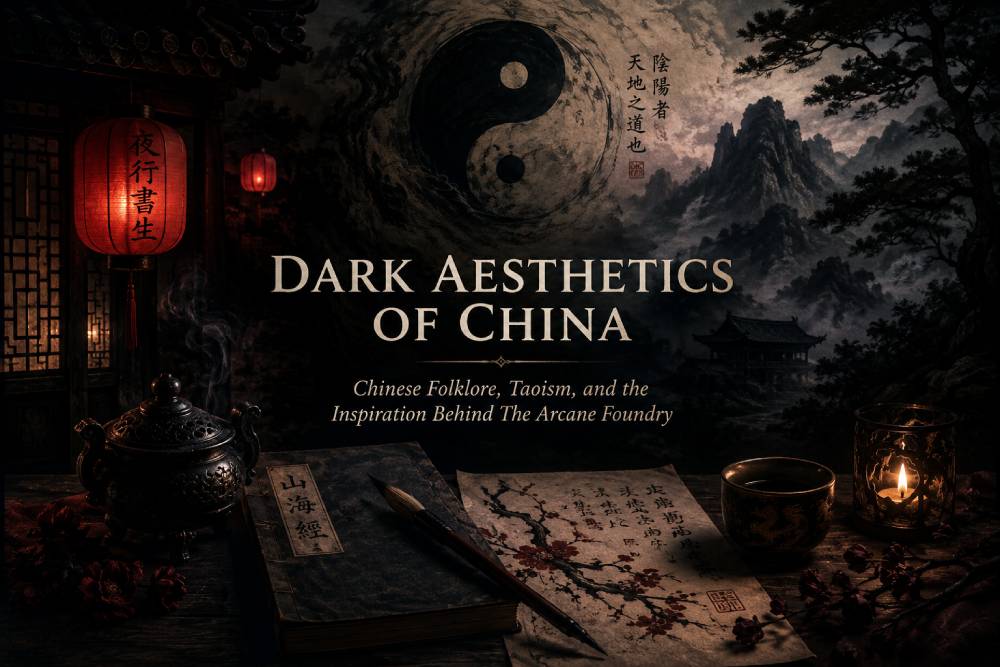
When most people think of dark aesthetics, they often imagine Gothic cathedrals, Victorian mansions, and European folklore. Yet every culture has its own shadows, mysteries, ghost stories, and traditions, and Chinese culture is no exception. As the creator of The Arcane Foundry, my appreciation for dark aesthetics is influenced not only by fantasy, folklore, and Dark Academia, but also by my own Chinese heritage and the stories that shaped my view of the world.
Looking Beyond Western Gothic Traditions
Many people might not be aware of how China has a rich tradition of ghost stories, supernatural folklore, monsters, mythology, haunted places, ancestor reverence, and mysterious legends. Long before I became interested in horror literature, miniature painting, candle making, and fantasy worlds, I was told stories of wandering spirits, fox spirits, haunted villages, and the unseen forces that appear throughout Chinese mythology by my dad and grandmother.
Unlike Western horror, which often focuses on fear and confrontation, many Chinese ghost stories focus on memory, ancestry, respect, and the relationship between the living and the dead. Darkness is not always something evil to be defeated. Sometimes it is something to be understood.
The Beauty of Darkness (the yin)
One of the ideas that has influenced me most is the concept that darkness and light are not enemies (yin and the yang). Traditional Chinese philosophy often emphasizes balance rather than opposition.
This appreciation for shadow can be found throughout Chinese architecture, gardens, paintings, temples, and literature. Ancient scholars often sought quiet places for reflection, surrounded by dark wood, candlelight, flowing water, and natural landscapes. These spaces were designed to encourage contemplation rather than constant stimulation.
That philosophy resonates strongly with me today.
Why The Dark Aesthetic?
For me, dark aesthetics are not about negativity, rebellion, or shock value. They are about appreciating history, craftsmanship, mystery, and the beauty found in places that others often overlook.
Whether it is an old Victorian home, a candlelit study, an ancient Chinese temple, a forgotten ghost story, or a hand-crafted miniature, I believe these things connect us to something larger than ourselves.
That belief ultimately became the foundation of The Arcane Foundry.
Examples of Dark Chinese Aesthetics Throughout History
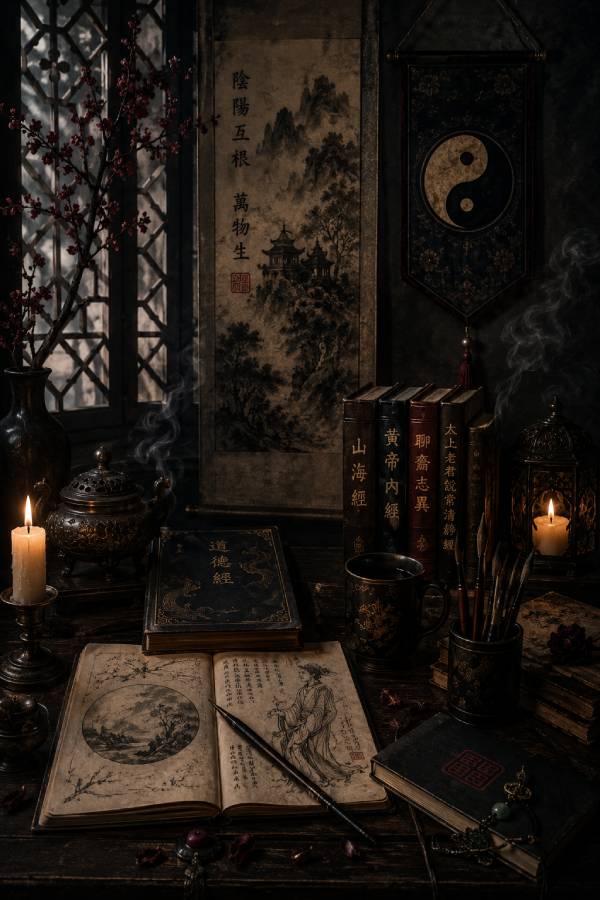
When people hear the phrase “dark aesthetics,” they often picture Gothic cathedrals, Victorian mansions, haunted cemeteries, and European folklore. Yet Chinese civilization has developed its own rich traditions of mystery, shadow, melancholy, and supernatural storytelling over thousands of years. Many of these influences helped shape my own appreciation for dark aesthetics and continue to inspire The Arcane Foundry today.
Chinese Ghost Stories and Strange Tales
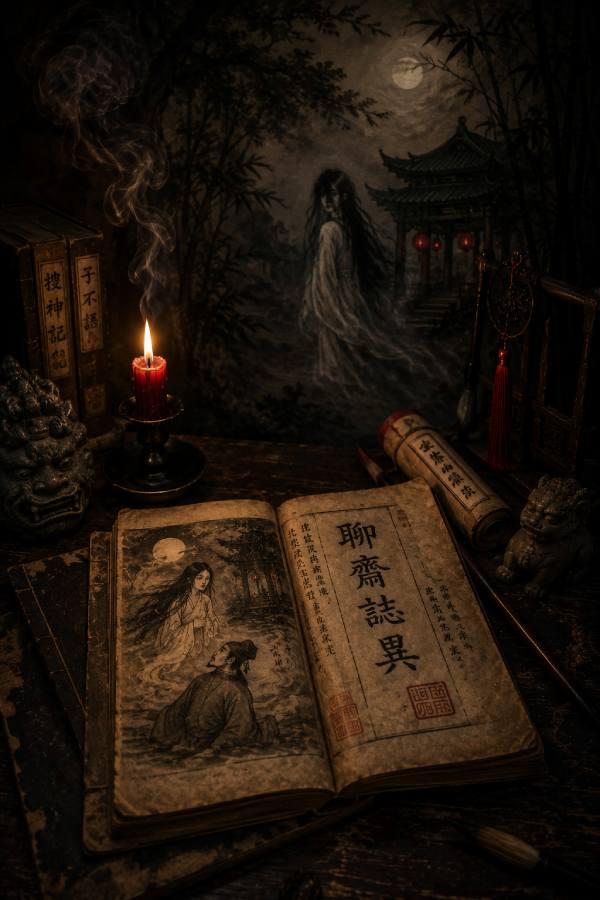
Long before modern horror literature, Chinese scholars were documenting stories of spirits, fox demons, haunted villages, wandering souls, and supernatural encounters. One of the most famous examples is Strange Tales from a Chinese Studio by Pu Songling, a collection of stories that blends horror, fantasy, romance, tragedy, and folklore.
Unlike many modern horror stories, these tales often focus on morality, memory, ancestry, and the relationship between the living and the dead. The supernatural is not always portrayed as evil. Sometimes it is mysterious, beautiful, tragic, or misunderstood.
Taoism, Yin, and the Beauty of Shadow
One of the most influential ideas in Chinese philosophy is the balance between Yin and Yang.
Modern Western culture often treats darkness as something negative that should be eliminated. Traditional Taoist thought takes a different approach. Yin is associated with shadow, mystery, stillness, reflection, moonlight, water, and the unseen. Yang represents light, activity, growth, movement, and energy.
Neither force is superior. Harmony comes from balance.
This appreciation for shadow appears throughout Chinese art, gardens, architecture, and literature. Darkness is not simply a source of fear. It can also represent wisdom, contemplation, mystery, and imagination.
Scholar Studios and the Original Dark Academia
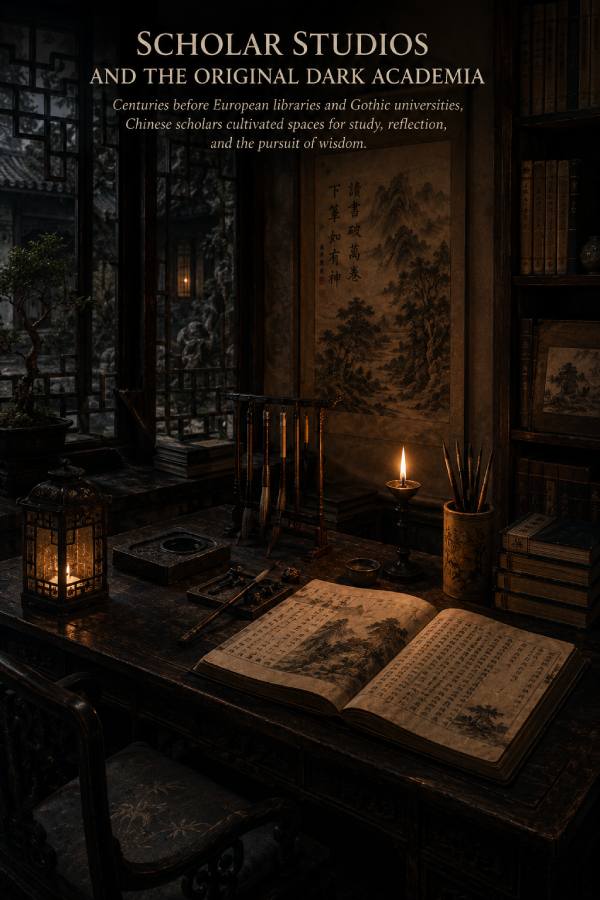
Many people associate Dark Academia with Victorian libraries, old universities, and candlelit studies. Yet traditional Chinese scholar studios embraced many of the same ideas centuries earlier.
These spaces often featured dark wood furniture, books, scrolls, ink brushes, tea sets, paintings, and carefully curated collections of art and natural objects. Scholars would spend hours reading, writing, painting, studying philosophy, and contemplating the natural world.
The atmosphere was quiet, intellectual, and deeply reflective. In many ways, these spaces embody the same spirit that attracts people to Dark Academia today.
Mountain Temples and Sacred Isolation
Chinese religious and philosophical traditions frequently sought wisdom in remote places.
Ancient monasteries, temples, and hermit retreats were often built high in mist-covered mountains, deep forests, or isolated valleys. Places such as Mount Hua and the Wudang Mountains combine natural beauty with a sense of mystery and solitude.
These landscapes evoke feelings that are remarkably similar to Gothic Romanticism: awe, introspection, wonder, and respect for forces larger than ourselves.
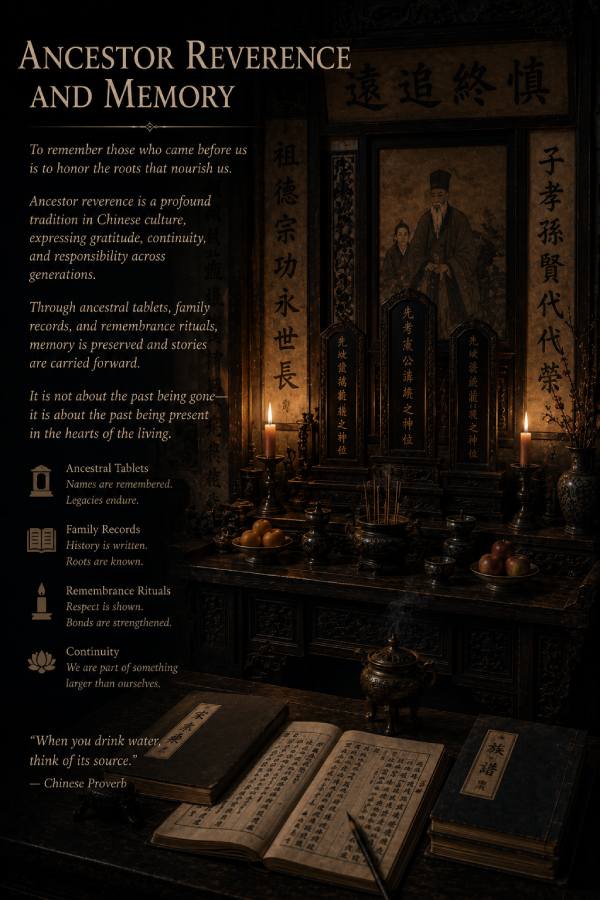
Ancestor Reverence and Memory
One aspect of Chinese culture that strongly resonates with me is the emphasis on remembering those who came before us.
Traditional ancestor halls, memorial tablets, family records, and remembrance ceremonies all reinforce the idea that we are connected to previous generations. This is not unlike the fascination with memory, mortality, and legacy found throughout Gothic literature.
Rather than treating death as something to ignore, these traditions encourage respect for history, family, and the continuity of human experience.
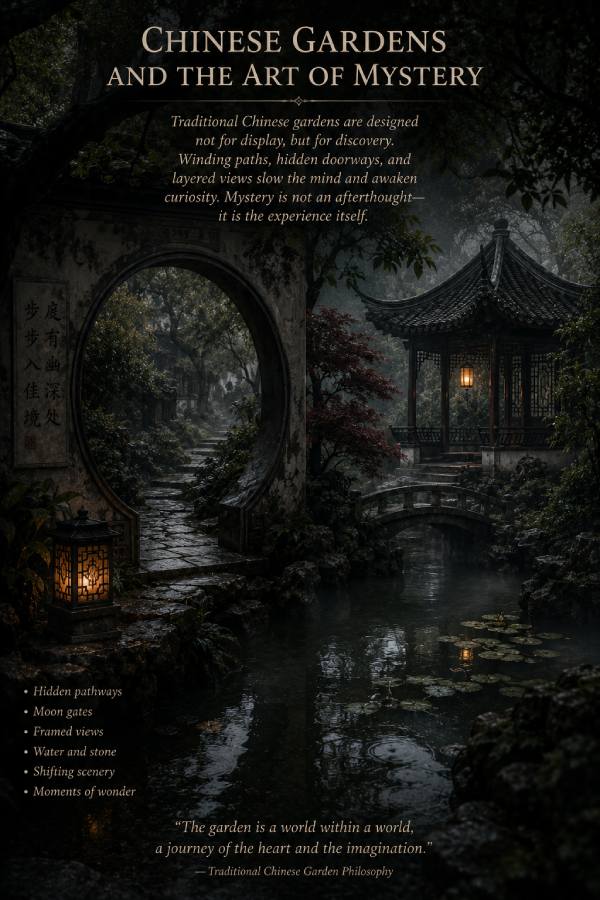
Chinese Gardens and the Art of Mystery
Traditional Chinese gardens were intentionally designed to create curiosity and discovery.
Instead of revealing everything at once, they use winding paths, moon gates, hidden courtyards, ponds, rock formations, and carefully framed views to create a sense of exploration.
Visitors are encouraged to slow down, wander, and experience a sequence of surprises. The goal is not efficiency but wonder.
This appreciation for mystery and atmosphere remains a major influence on how I think about spaces and experiences today.
What is Taoism and the Yin and Yang?
One of the philosophical ideas that has influenced my appreciation for dark aesthetics comes from Taoism and the concept of Yin and Yang. In Western culture, darkness is often portrayed as something negative to be feared or overcome. Traditional Chinese philosophy takes a more balanced view, recognizing that darkness and light are complementary forces that exist together.
Yin is associated with shadow, reflection, stillness, mystery, intuition, and the unseen world. Yang represents light, activity, energy, growth, and action. Neither is superior to the other. Instead, harmony is achieved through balance rather than dominance.
This perspective has shaped many aspects of Chinese art, architecture, gardens, literature, and design. A quiet courtyard illuminated by lantern light, a mountain landscape disappearing into fog, or a scholar’s study lit by candlelight all embrace the beauty of shadow rather than attempting to eliminate it. To me, this approach feels closely aligned with the dark aesthetics that inspire The Arcane Foundry. Darkness is not simply about fear or horror; it can also represent contemplation, mystery, wisdom, and imagination.
The Arcane Foundry draws inspiration from this idea. While many modern spaces seek to maximize brightness and stimulation, I find value in environments that encourage reflection, creativity, and curiosity. The interplay between shadow and light, history and modernity, fantasy and reality, all contribute to the atmosphere I hope to create.
Inspired by Goth, But Not Goth
People occasionally ask whether The Arcane Foundry is a “Goth space”. The answer is both yes and no.
Like many people drawn to Gothic aesthetics, I appreciate candlelit rooms, historic architecture, folklore, mystery, old books, haunted places, and the beauty found in shadows. Many of the visual elements that inspire The Arcane Foundry overlap with Dark Academia, Gothic Revival architecture, fantasy literature, horror fiction, and traditional craftsmanship.
At the same time, The Arcane Foundry is not tied to any particular music scene, fashion movement, political ideology, or religious belief. Its inspiration comes from a much broader range of sources, including Chinese philosophy, European folklore, Middle Eastern and Indian legends, historical architecture, mythology, craftsmanship, and traditions from cultures around the world.
Where modern Goth often emerged as a subculture, The Arcane Foundry is rooted in a broader appreciation for heritage, storytelling, creativity, and the enduring human fascination with mystery. It is less about belonging to a scene and more about preserving the things that make life interesting, meaningful, and beautiful.
In that sense, The Arcane Foundry may feel familiar to those who enjoy Goth, Dark Academia, fantasy, folklore, or historical aesthetics. Yet it ultimately stands as its own philosophy, one that values craftsmanship, curiosity, and the stories that connect us across generations and cultures.
A Place for Heritage, Craftsmanship, and Storytelling
You don’t have to share my heritage, or even my interest in Chinese folklore to feel at home here.
The Arcane Foundry celebrates creativity, craftsmanship, folklore, and community. It is a place where people from different backgrounds can share traditions, learn new skills, and discover stories that connect us to the past while inspiring the future.
My own journey began with Chinese heritage and a fascination with folklore, monsters, history, philosophy, and the darker side of mythology. Those influences helped shape The Arcane Foundry, but they are only part of the story. This studio is equally inspired by Western Gothic Horror, fantasy literature, haunted history, Dark Academia, traditional crafts, and the rich folklore found throughout cultures around the world.
If you are drawn to monsters, mythology, storytelling, craftsmanship, dark aesthetics, or the legends that have shaped your own heritage, you are welcome here. The Arcane Foundry is a place to learn, create, and share in the traditions, stories, and imagination that make every culture unique.