
All Kings Must Die: A Gothic Horror & Dark Fantasy Novel
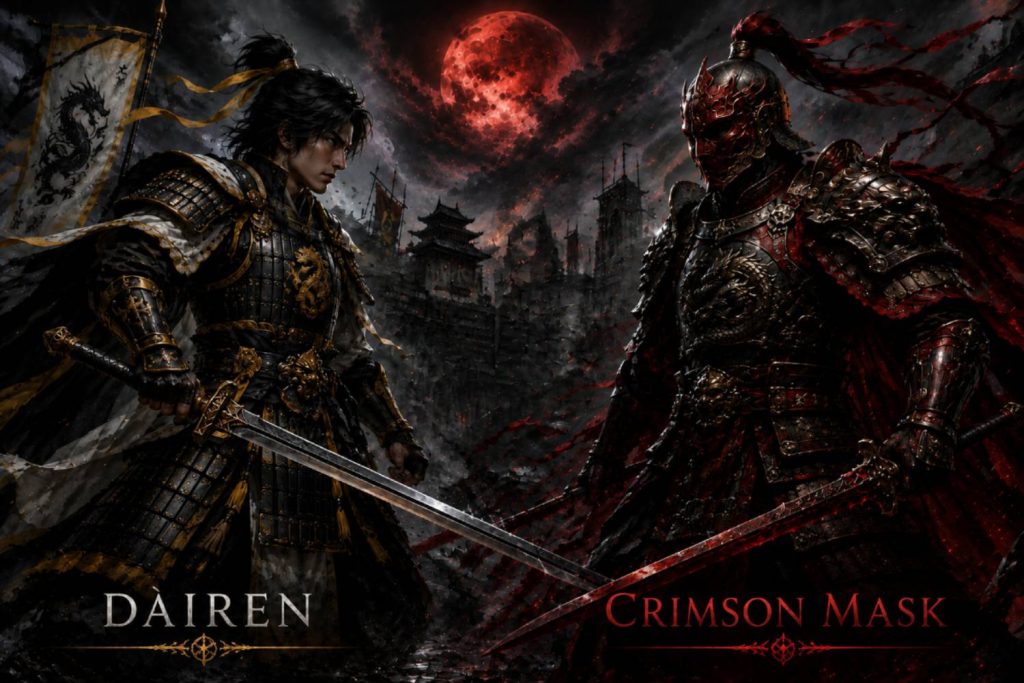
All Kings Must Die is a Gothic Horror and Dark Fantasy novel set in a world of warring empires, ancient rivalries, supernatural horrors, and forgotten secrets. At the center of the story is Dàiren, a warrior of Leedoria caught in a conflict that is becoming far more dangerous than the armies fighting it.
As war rages between Leedoria and Naddastria, Dàiren is drawn into increasingly brutal battles where conventional warfare collides with the unnatural. Demons, monsters, undead horrors, and forces that should have remained buried begin to emerge, while political ambition and the struggle for power threaten to consume both empires.
Among Dàiren’s most dangerous enemies is the mysterious Crimson Mask, a legendary warrior whose reputation has spread across the battlefield. Few know who hides behind the mask, and an eventual confrontation between Dairen and the Crimson Mask becomes one of the defining conflicts of the story.
But All Kings Must Die isn’t simply a story about heroes defeating villains. The people fighting these wars carry their own ambitions, loyalties, regrets, and secrets. Victory can come at a devastating cost, while the difference between hero and monster becomes increasingly difficult to define.
Blending military dark fantasy, Gothic horror, political intrigue, supernatural terror, and tragic character-driven storytelling, All Kings Must Die explores what happens to people when duty, family, loyalty, and survival begin pulling them in different directions.
In this world, kings build empires believing their power will last forever.
Eventually, they all learn the same truth: all kings must die.
Read All Kings Must Die Free Online
All Kings Must Die is available to read completely free online. New and existing readers can follow the story chapter by chapter as Dàiren is pulled deeper into the war between Leedoria and Naddastria and discovers that the horrors threatening his world extend far beyond the battlefield.
There is no purchase required to begin reading. Start with Chapter One below, or return to this page as new chapters are released.
What Kind of Dark Fantasy Is All Kings Must Die?
All Kings Must Die combines the scale of military dark fantasy with the atmosphere and supernatural dread of Gothic horror. The story takes place against a war between rival empires, but armies and political ambition are only part of the danger.
The deeper Dàiren travels into the conflict, the more the familiar rules of warfare begin to break down. Monsters, demons, undead horrors, ancient forces, and the mysterious Yamalaya exist alongside soldiers, fortifications, political rivalries, and struggles for power.
Rather than presenting a simple conflict between good and evil, the novel focuses on people with competing loyalties, ambitions, fears, and motivations. Heroes can make terrible choices, enemies can have reasons for what they do, and surviving a battle doesn’t necessarily mean anyone has won.
- All
- Gallery Filter
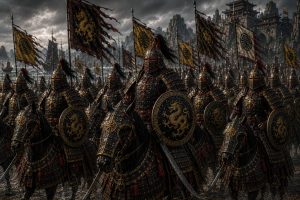
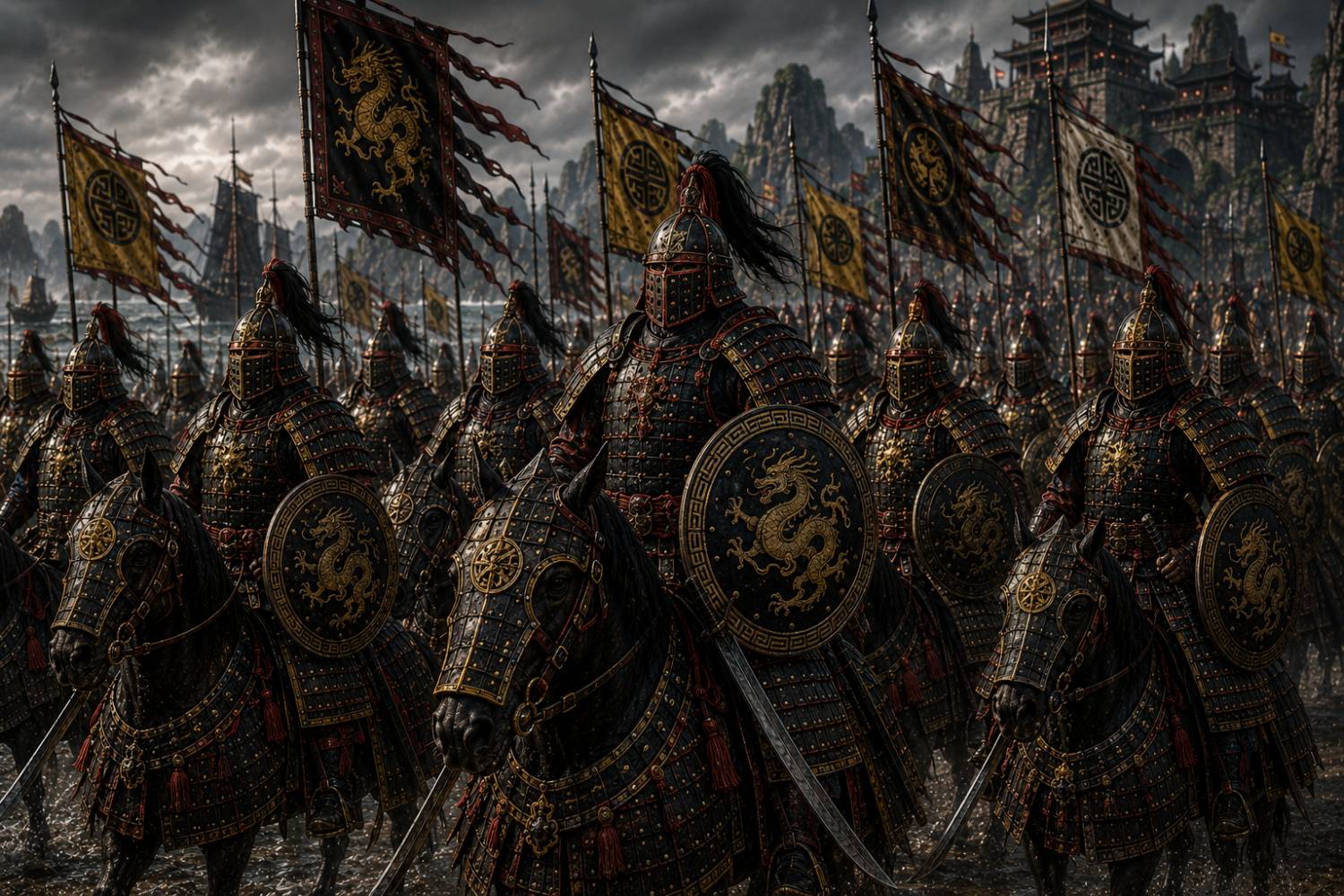
Leedorian Knights
The Leedorian Knights are the elite heavy cavalry of the Leedorian Empire, distinguished by their ornate black, yellow, and white lamellar armor and heavily armored warhorses. Drawn from experienced warriors and prestigious military families, they combine disciplined cavalry tactics with the empire’s tradition of heavily armored warfare. Used to break enemy formations and spearhead major offensives, Leedorian Knights are among the most prestigious and formidable soldiers serving Emperor Ghalhan.
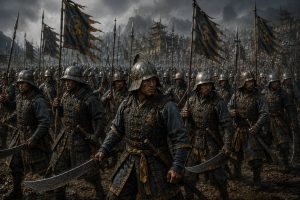
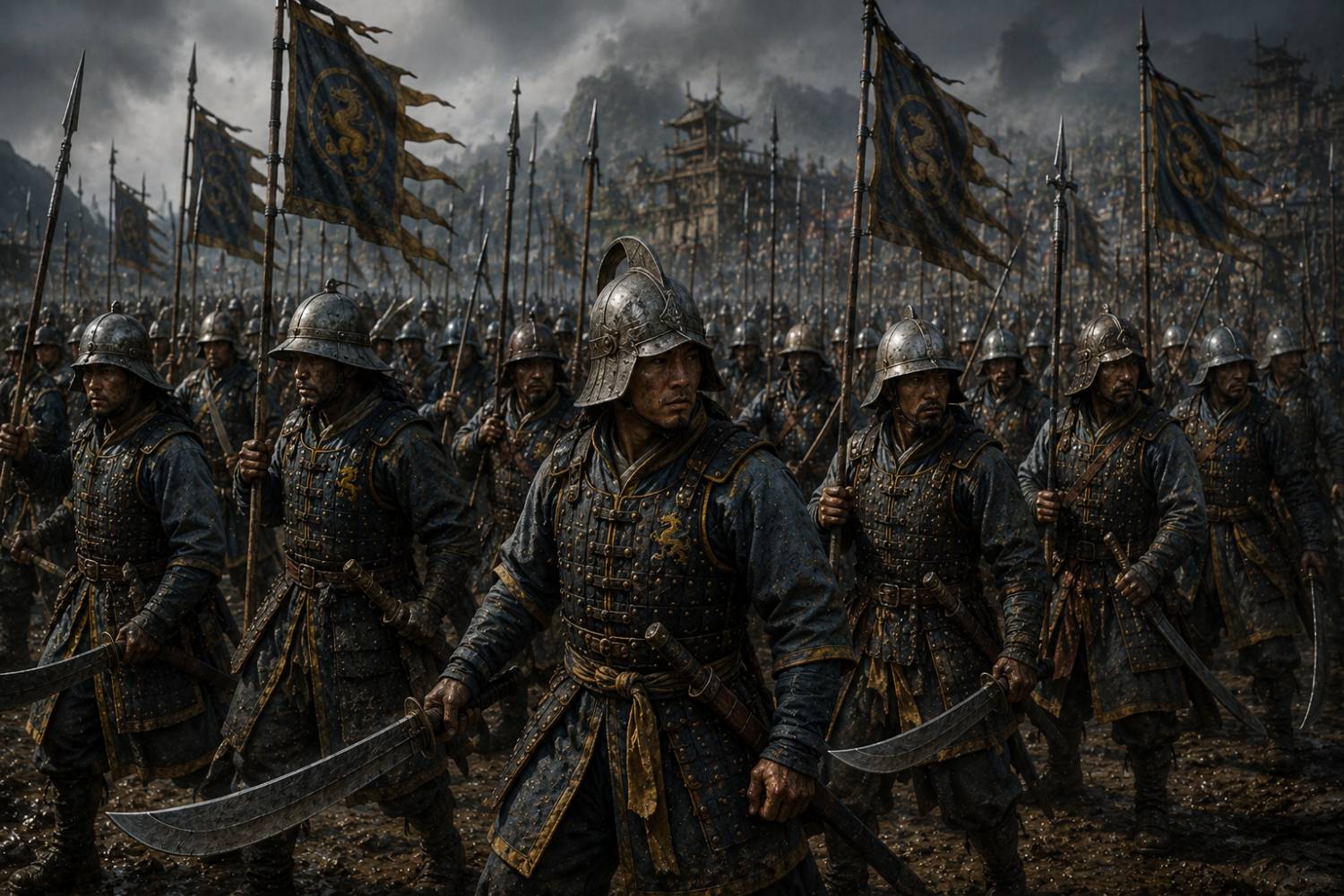
Shibarran Infantry
The Shibarran Infantry form the backbone of the Kingdom of Shibaro’s armies, wearing practical blue-gray brigandine armor with yellow trim and an assortment of steel helmets reflecting the varied equipment of its provincial forces. Armed primarily with dao, spears, bows and polearms, they are disciplined soldiers accustomed to fighting across Shibaro’s coastal plains, dense forests, and rugged mountain terrain. Their equipment is less ornate than that of Leedoria or Naddastria, emphasizing durability, mobility, and the practical needs of defending their homeland.
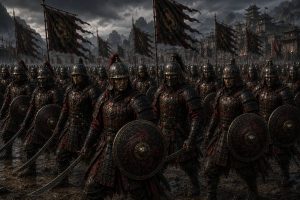
Naddastrian Infantry
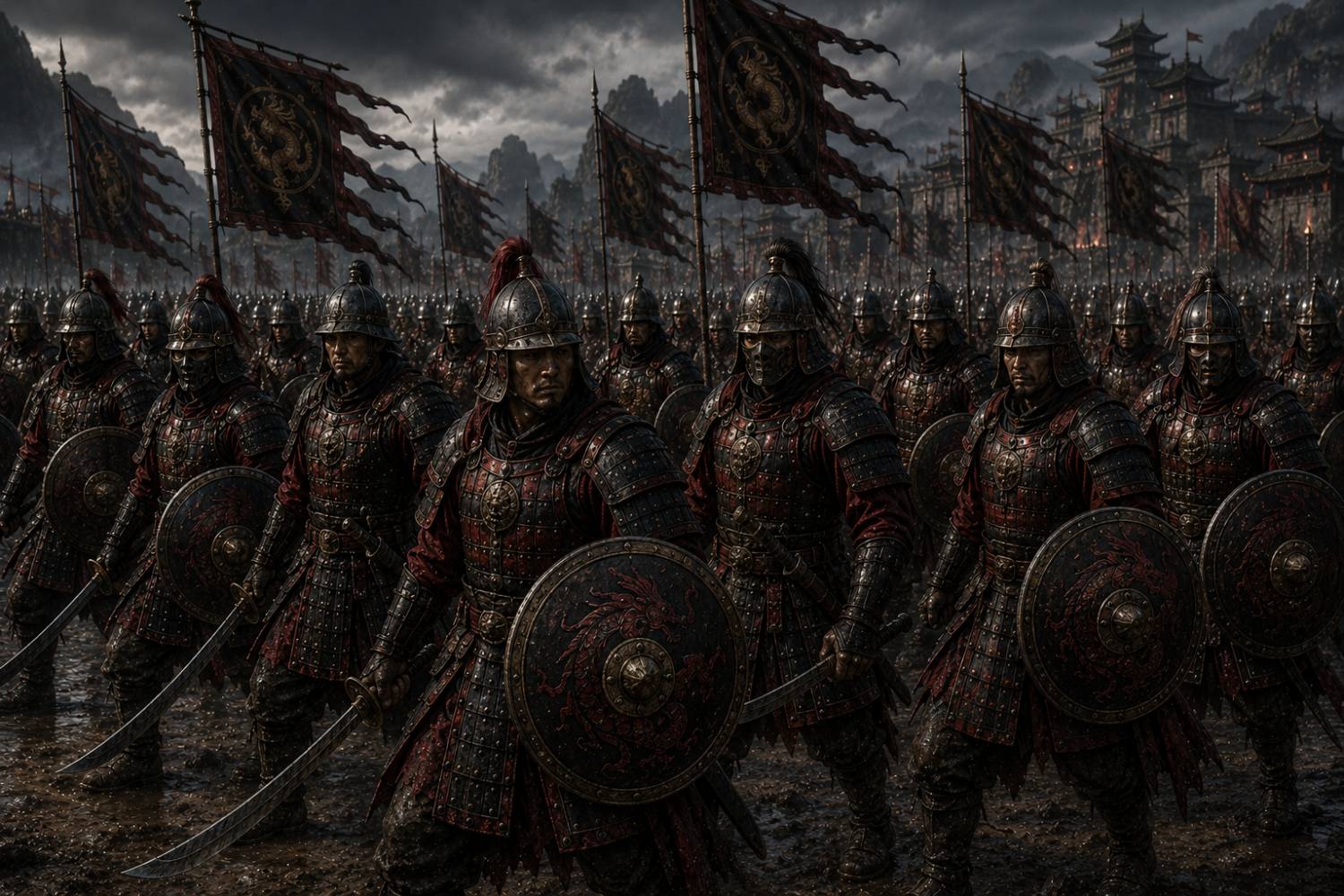
The Naddastrian Infantry form the disciplined core of King Nàdiro’s armies, distinguished by their imposing red-and-black heavy plate armor and varied steel helmets. Their forces include soldiers armed with crossbows, bows, spears, polearms, swords, and round shields, allowing Naddastrian commanders to field versatile formations capable of both ranged and close combat. Drawn from across the conquered archipelago, they represent the transformation of Naddastria from scattered island peoples into a formidable military power.
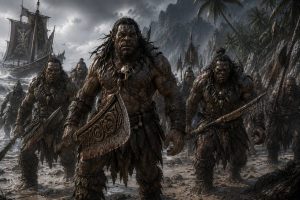
Kharu
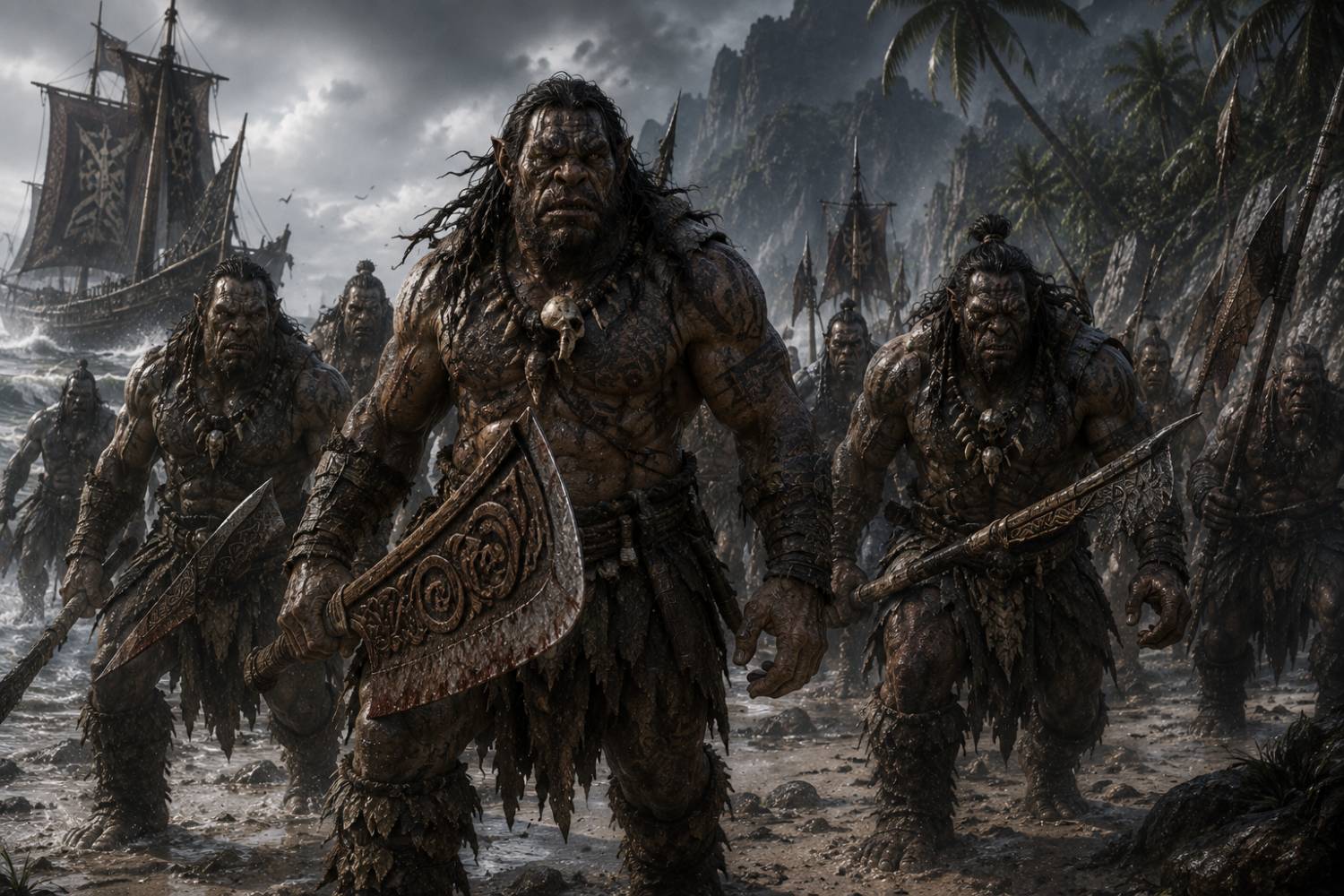
The Kharu are a powerful humanoid race native to the Naddastrian Archipelago, known for their immense strength, heavy builds, and formidable presence in battle. Inspired by fantasy orcs, Neanderthals, and Polynesian island warrior cultures, they wear crude armor and wield heavy clubs, cleavers, spears, and traditional island-inspired weapons. Though often regarded as brutish by outsiders, the Kharu possess their own tribal culture and warrior traditions and were eventually brought under King Nàdiro’s rule during his unification of Naddastria.
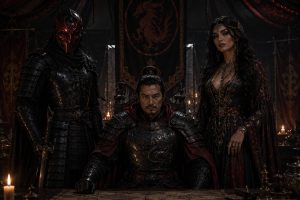
Crimson Mask, General Taizhar and Rashira
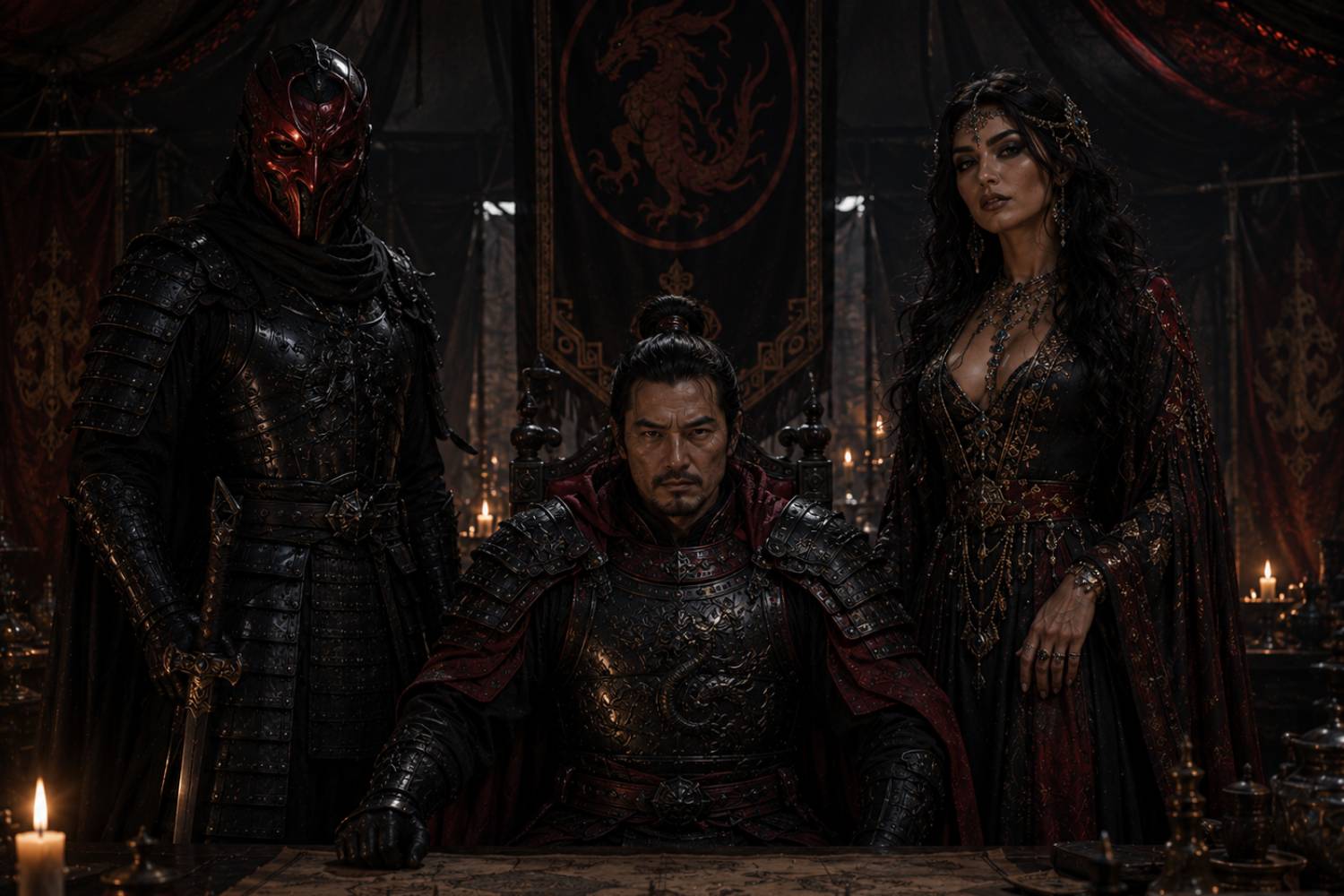
Crimson Mask, General Taizhar, and Rashira are three of the most feared figures serving King Nàdiro and the armies of Naddastria. Crimson Mask is Naddastria’s legendary undefeated warrior, renowned for slaying men, monsters, and demons alike; General Taizhar is a senior military commander entrusted with leading Naddastrian forces in the king’s campaigns; and Rashira, known as the Witch, is an immortal sorceress whose beauty, elegance, and noble bearing conceal formidable supernatural power. Together, they represent the martial strength, military authority, and dark magic behind Nàdiro’s conquests.
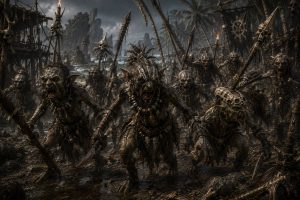
Gharai
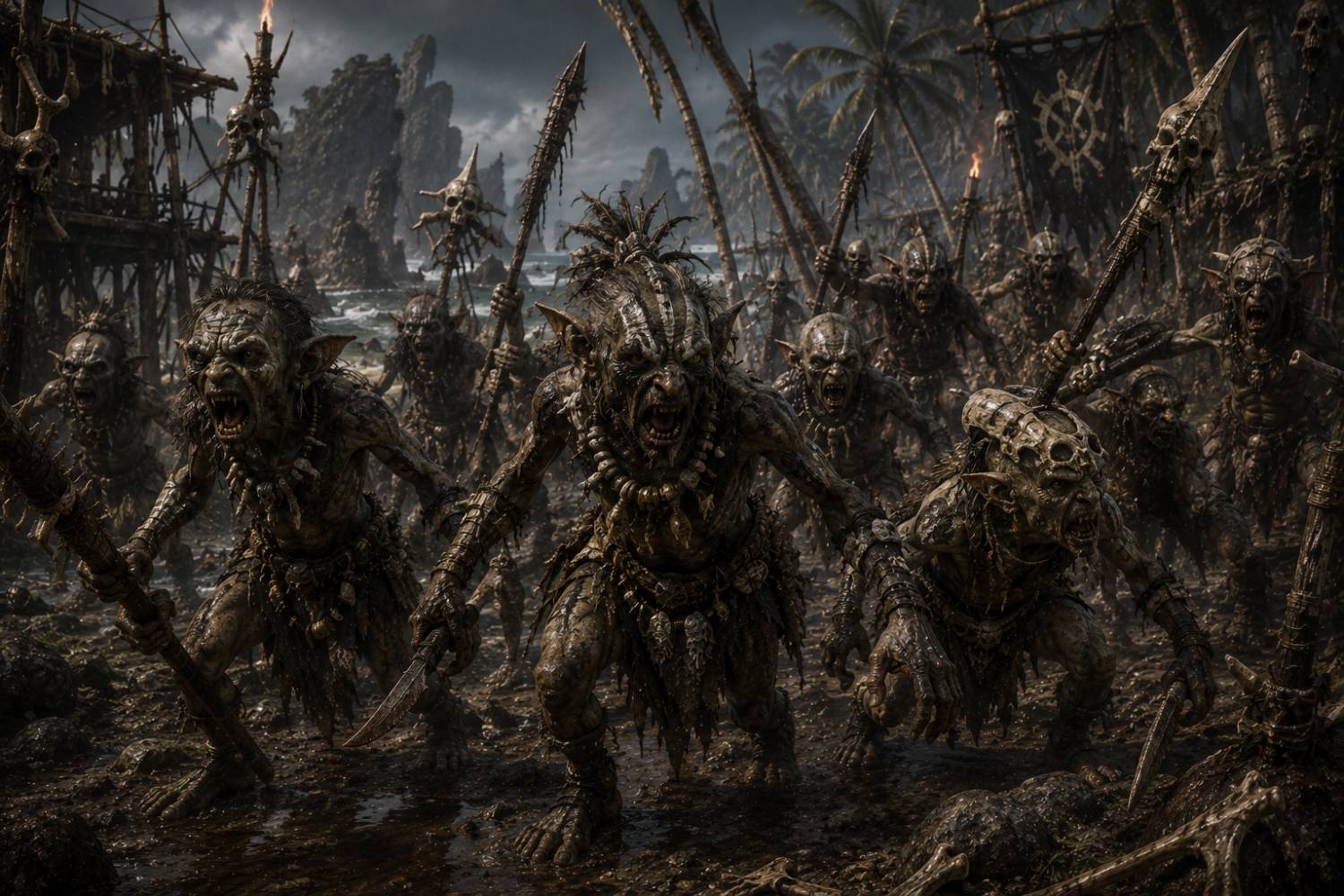
The Gharai are a small, primitive humanoid race native to the remote islands of the Naddastrian Archipelago. Inspired by goblins, folkloric ghouls, and early hominins such as Homo habilis, they have wiry builds, hunched features, and a distinctive island culture centered around bones, skulls, shells, and crude weapons. Though savage in appearance, the Gharai possess their own tribal societies and traditions and were eventually brought under King Nàdiro’s rule during his conquest of Naddastria.
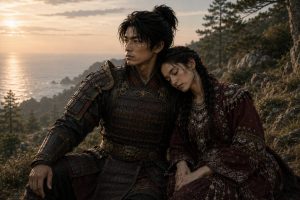
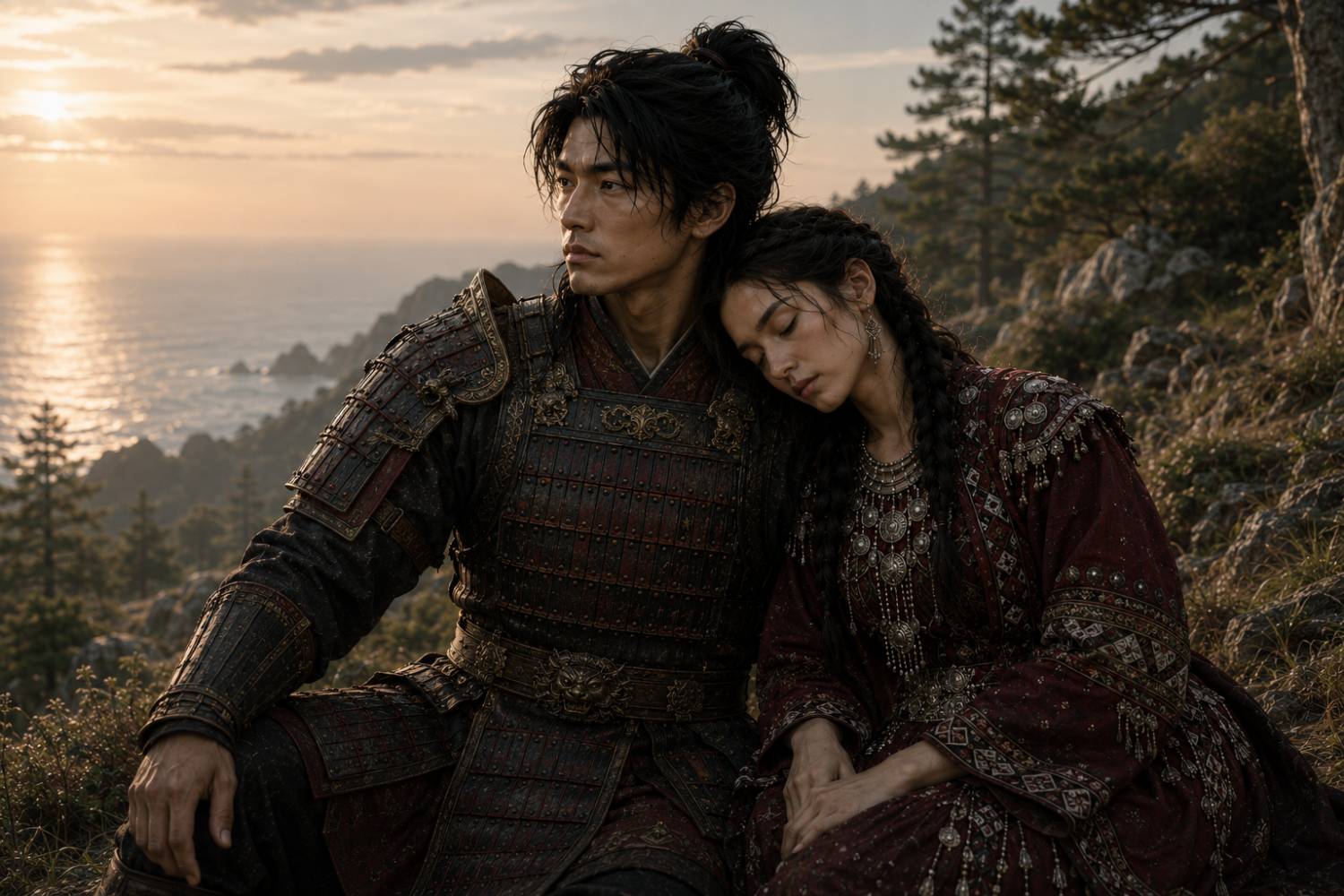
Dàiren and Valana
Dàiren and Valana are two young companions whose lives are transformed by the growing war surrounding Shibaro. Dàiren is a determined young warrior forced to confront responsibilities far beyond the life he once knew, while Valana is compassionate, resilient, and fiercely loyal despite the dangers surrounding them. Their bond becomes a source of strength as they face an increasingly violent and uncertain world together.
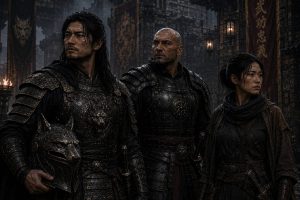
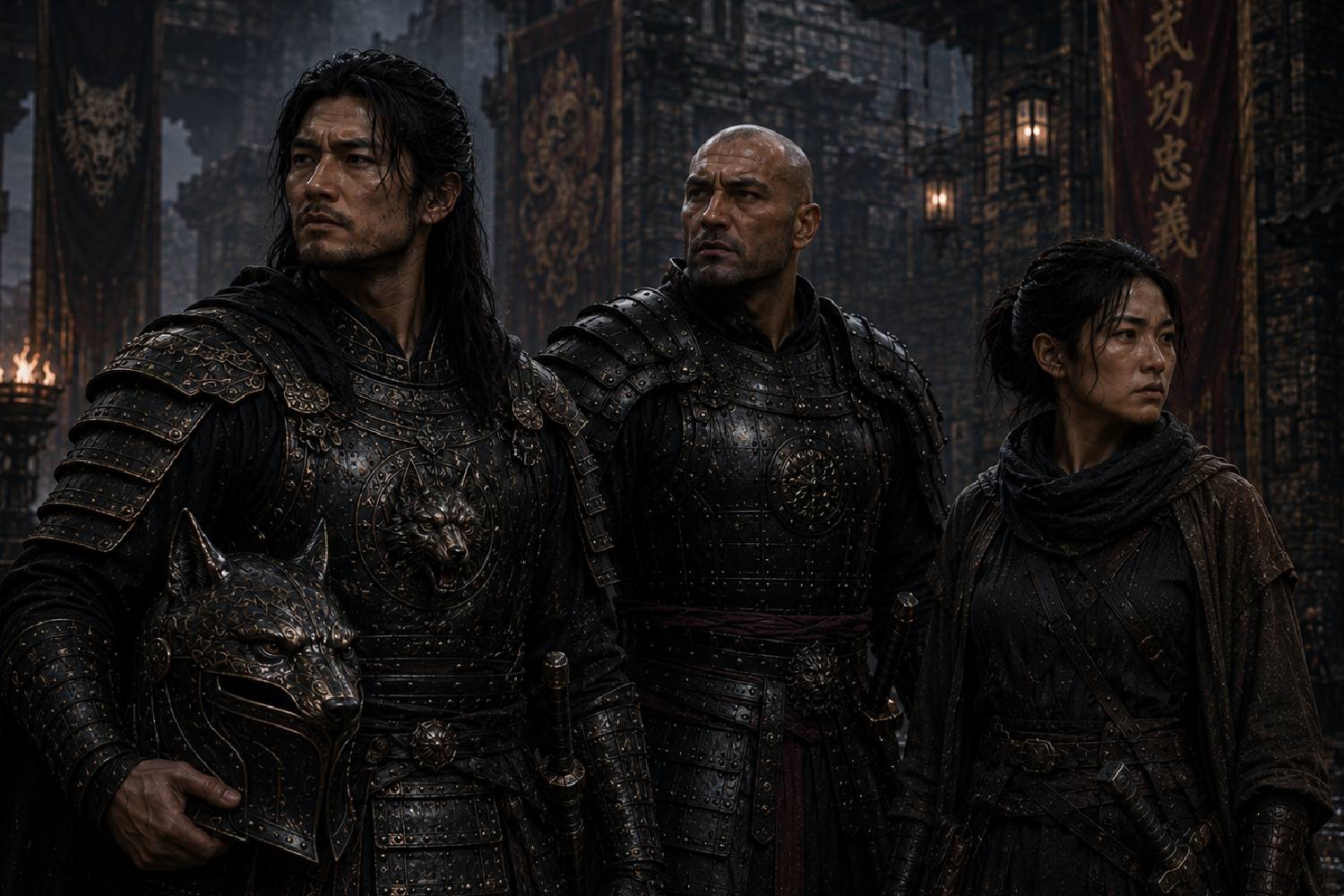
Captain Lanza, Lieutenant Kaivar and Sekuya
Captain Lanza, Lieutenant Kaivar, and Sekuya are Naddastrian officers under the command of Crimson Mask. Captain Lanza is a minor noble and disciplined warrior distinguished by his ornate armor and distinctive wolf-faced helmet; Lieutenant Kaivar is a rugged, powerfully built veteran whose imposing appearance reflects years of military service; and Sekuya is a Kitsune, a supernatural fox spirit capable of assuming human form. Traveling in the guise of a human woman, her supernatural nature and unique abilities make her a valuable and mysterious member of the group.
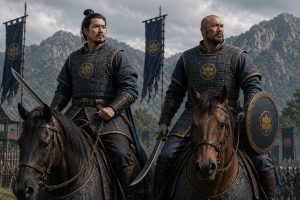
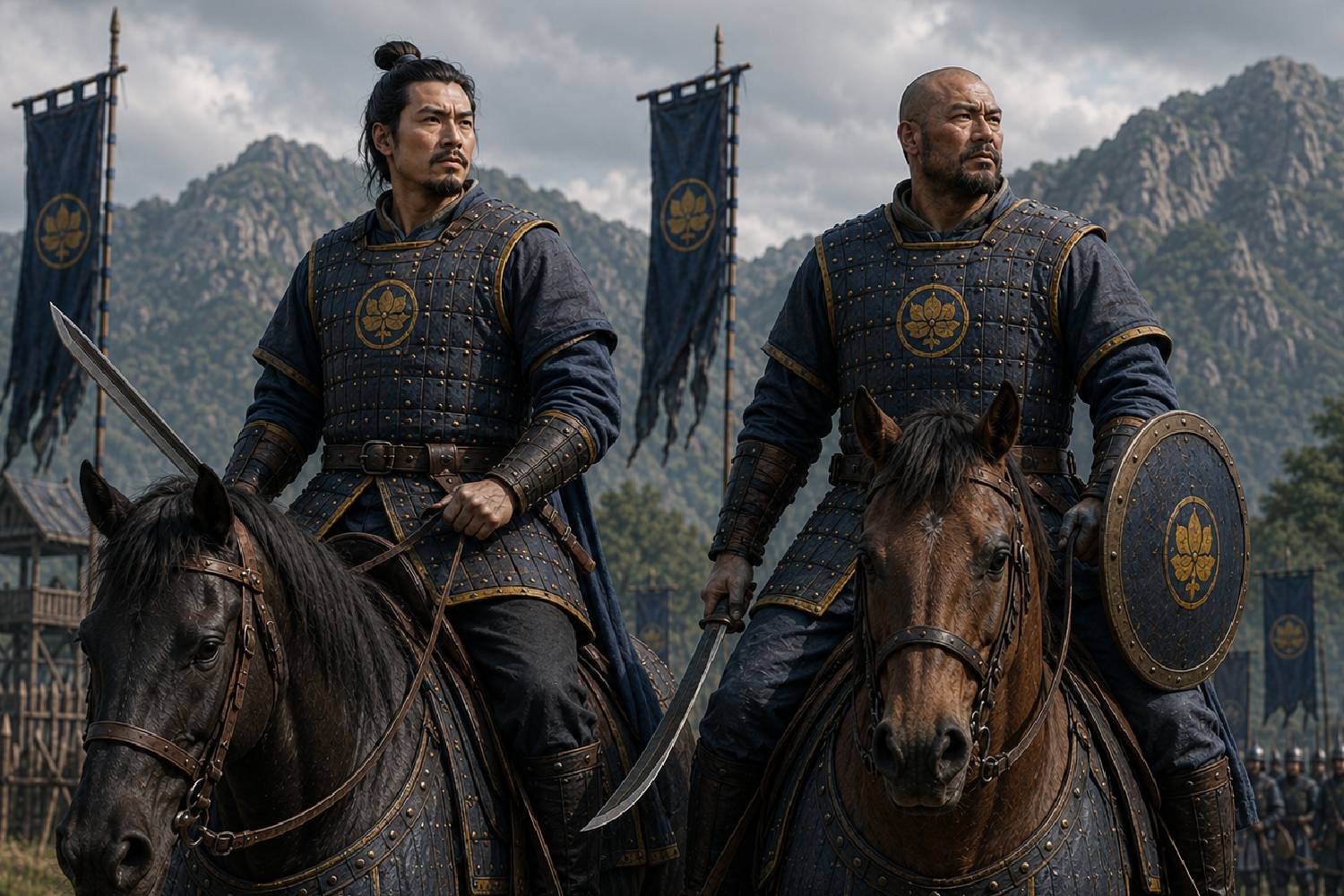
Captain Dargyen and Sergeant Brenkai
Captain Dargyen and Sergeant Brenkai are veteran officers serving in the Shibarran military, both equipped in the kingdom’s distinctive blue-gray armor with yellow trim. Captain Dargyen carries a jian and shield, reflecting his more refined and disciplined approach to combat, while Sergeant Brenkai is an older, shaved-headed veteran with light stubble who fights with a dao and shield. Experienced, dependable, and hardened by military service, the two represent the seasoned soldiers responsible for holding Shibaro together as war spreads across the kingdom.
The Kingdom of Shibaro
The Kingdom of Shibaro occupies a diverse land south of the great mountain ranges separating it from the Leedorian Empire. Ruled by King Shaeren VI and Queen Liyara, Shibaro is a kingdom of towering mountains, deep forests, fertile valleys, and open coastal plains. Its people have adapted to dramatically different landscapes, producing communities equally at home among the harsh mountain passes of the north and west and the warmer coastal regions of the east and south.
Much of northern and western Shibaro is dominated by rugged mountains and heavily forested wilderness. Settlements here are often separated by difficult terrain, and generations of life at higher elevations have produced hardy communities accustomed to cold winters, steep trails, and relative isolation. Hunting, forestry, herding, mountain agriculture, and trade through the passes have traditionally shaped life in these regions.
The land gradually changes as travelers journey east and south. Mountains give way to forested valleys and broad coastal plains, where the climate is milder and settlements become increasingly connected to agriculture, fishing, and maritime trade. Shibaro’s coastal communities have developed traditions distinct from their mountain-dwelling countrymen, yet both remain part of a culture shaped by the kingdom’s varied and sometimes unforgiving landscape.
In the eastern reaches lies Heshin Village, surrounded by the forests and plains of the region. Several days’ journey north and toward the center of the country stands Shibaro Castle, the seat of King Shaeren VI and Queen Liyara and the political heart of the kingdom. From here, the monarchy governs the territories stretching from the southern coast to the foothills of the northern mountains.
Farther north lies Jinrao Pass, the great mountain gateway between Shibaro and Leedoria. The pass remains open for trade, allowing merchants, travelers, and goods to move between the two kingdoms. Its narrow approaches and surrounding mountains also make it one of Shibaro’s greatest defensive positions. Generations of soldiers have regarded Jinrao Pass as invincible, believing that no invading army could successfully force its way through the mountains.
Shibaro’s forests and remote highlands are also home to much older stories. Among the most persistent is the legend of the Yeren, a mysterious humanoid creature said to inhabit the deepest forests and isolated mountain regions. Descriptions vary between villages—some regard the Yeren as little more than an animal, others as an intelligent being, and some believe it belongs to a world older than the kingdom itself. Despite generations of reported sightings, definitive proof of the creature remains elusive.
For centuries, Shibaro’s mountains, forests, and isolation helped protect the kingdom from many of the conflicts beyond its borders. Its people became traders, farmers, fishermen, hunters, and mountain dwellers rather than conquerors. But geography provides less protection from the sea.
To the east lies the vast Naddastrian Archipelago, now unified under King Nadíro. With Naddastrian ambitions turning toward the mainland, Shibaro’s accessible coastline and eastern plains have placed the kingdom directly in the path of an expanding empire.
For King Shaeren VI and Queen Liyara, the challenge is no longer simply preserving the traditions and stability of their mountain and coastal kingdom. They must now defend a realm whose greatest fortress faces north, while its greatest threat approaches from the east.
The Leedorian Empire
The Leedorian Empire is one of the largest and most powerful nations on the mainland, a vast realm held together through military strength, centralized authority, and an extensive network of governors, fortified cities, and trade routes. From the imperial capital at the heart of the country, Emperor Ghalhan rules territories stretching from the western trade roads to the eastern coast and from the northern frontier to the great mountains overlooking Shibaro.
Leedorian society is deeply militaristic and disciplined. Military service carries considerable prestige, fortified settlements guard strategically important regions, and the empire maintains professional armies capable of responding to threats across its enormous territory. Soldiers are expected to serve not merely as warriors but as representatives of imperial authority wherever the emperor’s banners fly.
Yet Leedoria’s size is both its greatest strength and one of its greatest weaknesses. The farther one travels from the capital, the more power rests in the hands of provincial governors, military commanders, and influential local families. Some are fiercely loyal to Emperor Ghalhan. Others obey because the empire remains powerful enough to demand it. A dangerous few quietly imagine themselves ruling without an emperor at all.
Western Leedoria
Western Leedoria is among the empire’s more prosperous and stable regions. Great overland trade routes connect its cities with the Azharadi Kingdoms and Zorvask, bringing foreign goods, travelers, merchants, and wealth into the empire.
Its governors generally benefit from the stability provided by imperial rule, making the western provinces some of the more dependable territories under Ghalhan’s authority. Nevertheless, distance from the capital ensures that powerful provincial rulers retain considerable influence over local affairs.
Eastern Leedoria
The eastern provinces are defined by the sea. Numerous port cities line the coastline, supporting fishing fleets, merchant vessels, naval forces, and maritime commerce with neighboring lands.
Trade with Shibaro has long connected the two regions, with ships traveling between their respective coastal settlements. Leedorian merchants once occasionally traded with the distant Naddastrian Archipelago as well, bringing exotic goods and materials from its islands before King Nadíro’s expansionist campaigns transformed Naddastria from an unpredictable trading partner into an increasingly hostile power.
Politically, Eastern Leedoria is less reliable than the west. Some governors remain committed to the empire, while others place provincial interests ahead of imperial ones. Loyalties can shift according to wealth, military strength, personal rivalries, and events in the capital, leaving the east divided between genuine imperial loyalists and rulers whose obedience may last only as long as it remains advantageous.
Southern Leedoria
The southern frontier is dominated by mountains, with Jinrao City standing near the strategic gateway through them. Beyond lies Jinrao Pass, the formidable mountain route connecting Leedoria with the Kingdom of Shibaro.
The pass serves both commerce and defense. Merchants and travelers move between the two kingdoms through its fortified approaches, but invading armies face narrow roads, difficult terrain, and prepared defenses. Jinrao Pass has consequently earned a reputation as impenetrable, making a conventional invasion of southern Leedoria extraordinarily difficult.
Despite this security, the southern provinces have a complicated relationship with the empire. Distance from the capital and a strong regional identity have encouraged independence-minded attitudes, particularly among powerful local figures. Southern governors may acknowledge Emperor Ghalhan’s authority while privately believing their lands would prosper without interference from the imperial court.
The Northern Frontier
Northern Leedoria faces a very different threat. Beyond the empire lie the vast Urzhan Steppes, home to raiders capable of striking across the frontier before retreating into the open country.
A chain of forts and military settlements protects northern Leedoria against these incursions. Generations of soldiers have served along this frontier, where raids, skirmishes, and periods of uneasy peace have become part of everyday life.
Relations with the peoples of the Urzhan Steppes are not exclusively hostile. Trade continues even between communities that may later find themselves on opposite sides of a battle. Horses, livestock, weapons, manufactured goods, and other commodities cross the frontier, creating an uneasy relationship in which merchant caravans and raiding parties can emerge from the same lands.
Keepers and Invokers
Leedoria’s armies defend the empire against mortal enemies, but the empire recognizes that not every threat can be defeated by ordinary soldiers.
Leedorian culture is deeply intolerant of monsters and supernatural creatures that threaten human settlements. Rather than accepting such beings as an unavoidable part of the world, the empire developed specialized traditions dedicated to hunting and destroying them.
Keepers belong to disciplined martial orders whose rigorous physical and spiritual training prepares them to confront threats ordinary warriors may struggle to defeat. Their monasteries and training grounds produce fighters known for exceptional discipline, physical conditioning, and specialized knowledge of supernatural creatures.
Invokers approach the supernatural through ritual knowledge, mystical practices, wards, talismans, and other techniques intended specifically for confronting unnatural entities. They are particularly valuable when dealing with enemies that cannot simply be killed with conventional weapons.
Together, Keepers and Invokers hunt undead, jiangshi, demons, restless spirits, monsters, and other supernatural threats throughout imperial territory. Where reports of unnatural activity become serious enough, local authorities may request their intervention—or the empire may send them whether the local governor wants their presence or not.
Their existence reflects a fundamental Leedorian belief: the supernatural is real, it is dangerous, and anything that threatens the empire must be brought under control or destroyed.
An Empire Held Together by Strength
Under Emperor Ghalhan, Leedoria remains formidable. Its armies protect distant frontiers, merchants travel across both land and sea, fortified cities command strategic routes, and imperial authority extends across an enormous portion of the mainland.
But Leedoria is not as unified as its banners suggest.
The west and north remain comparatively dependable, their prosperity and security closely connected to the empire. The east is divided, with loyal governors ruling alongside ambitious men whose allegiance to the throne is far less certain. The south sits at the edge of imperial authority, where independence has an appeal that few would openly admit while Ghalhan remains powerful.
Every governor understands the same reality: the emperor’s authority ultimately depends upon his ability to enforce it.
For now, Emperor Ghalhan sits upon the throne and Leedoria remains one empire.
But across distant provinces, ambitious men are always watching the capital and waiting to see what happens when the emperor’s grip begins to weaken.
The Naddastrian Archipelago
Naddastria is a sprawling archipelago east of the mainland, composed of countless islands scattered across a vast and often dangerous sea. Rocky coastlines, isolated settlements, dense wilderness, and treacherous waters have kept many of the islands separated for generations, allowing radically different peoples, cultures, and creatures to develop throughout the region.
At the heart of the archipelago stands its capital and greatest port city, Kurohama City. Merchant vessels from across Naddastria gather within its harbor, making the city the center of the kingdom’s trade, wealth, and growing naval power. Above the crowded waterfront, Nadiro’s castle rises from the rocky coastline, commanding a view of the harbor and surrounding sea. The fortress is naturally protected by the terrain, with only a single fortified approach providing access to the main keep.
Beyond Kurohama City, the archipelago becomes considerably less orderly. Piracy is common throughout Naddastrian waters, particularly among the more remote islands and shipping routes. Hidden coves, isolated settlements, and countless smaller islands provide ideal refuges for pirates, smugglers, mercenaries, and others who prefer to remain beyond the direct reach of the king.
Naddastria is also home to an extraordinary variety of peoples. Humans live alongside the Kharu, Gharai, ogres, Kitsune, Bunari, and numerous other humanoid and monstrous races. The islands contain equally unusual wildlife, including giant apes, enormous Komodo-like dragons, and creatures rarely encountered anywhere on the mainland.
Even the Naddastrians do not know everything that inhabits their homeland. Some islands remain poorly explored or entirely uncharted, and sailors return with stories of unknown animals, forgotten peoples, strange humanoids, and monstrous creatures inhabiting the deeper wilderness. Whether every sailor’s tale is true is another question, but Naddastria remains one of the world’s great frontiers for undiscovered life.
For much of its history, this diversity kept the archipelago divided. Islands were controlled by independent tribes, clans, warlords, and competing peoples who fought one another as often as they traded. King Nadiro changed that.
Before becoming king, Nadiro rose as a warlord and began systematically conquering the islands. He defeated rival human tribes, subjugated the Kharu and Gharai, brought ogres beneath his banner, and ultimately united peoples such as the Kitsune and Bunari within his growing domain. Through conquest, alliances, intimidation, and political calculation, he accomplished what no ruler before him had managed: the creation of a unified Naddastrian kingdom.
That unification transformed the archipelago from a collection of competing island peoples into an emerging imperial power. Merchant ships now bring wealth into Kurohama City, warriors from numerous races serve beneath the same banners, and Nadiro can draw upon resources scattered across an enormous island realm.
Having conquered the islands, however, Nadiro has begun looking west across the sea.
The same warriors and creatures that once fought one another throughout Naddastria are now being assembled for campaigns against the mainland—and the warlord who conquered an archipelago has no intention of allowing the ocean to mark the limits of his empire.
The Urzhan Steppes
Beyond Leedoria’s northern frontier stretch the Urzhan Steppes, an immense expanse of open grasslands, windswept plains, rolling hills, and distant mountains. The region is home to numerous Urzhan tribes, many of whom live as nomadic or semi-nomadic peoples whose lives revolve around horses, livestock, hunting, trade, and warfare.
The Urzhan are renowned as skilled horsemen and warriors, capable of traveling enormous distances across terrain that outsiders often find empty and unforgiving. Individual tribes are led by their own chieftains and warlords, and alliances between them can be temporary. Feuds, competition over territory and resources, and generations-old rivalries have historically prevented the steppes from becoming a single unified nation.
Relations with the Leedorian Empire are equally complicated. Some Urzhan tribes raid settlements and military outposts along the northern frontier, forcing Leedoria to maintain a network of forts to defend its borders. Others trade with Leedorian merchants, exchanging horses, livestock, hides, and goods from the steppes for products manufactured within the empire. Depending upon the tribe and the season, the same frontier can be a place of commerce or bloodshed.
Much of what occurs deeper within the Urzhan Steppes remains poorly understood in Leedoria. Travelers have recently carried rumors south of a powerful warlord attempting to bring the scattered tribes beneath a single banner. Whether these stories represent a genuine movement toward unification or merely another ambitious chieftain whose influence will disappear as quickly as it arose remains unknown.
For now, the Urzhan remain divided.
But Leedoria has learned never to ignore rumors coming from beyond its northern walls.
The Kingdom of Varashia
Far beyond the more familiar lands of Leedoria and Shibaro lies Varashia, a vast jungle kingdom surrounded by mystery. Dense forests, immense rivers, ancient mountains, and untamed wilderness dominate much of what outsiders believe to be Varashian territory, but reliable maps of the kingdom are rare. Even its borders are poorly understood, and accounts brought back by travelers frequently contradict one another.
Unlike the neighboring kingdoms whose armies, rulers, and political struggles are relatively well known, very little is understood about Varashia itself. Foreign merchants seldom penetrate far beyond its outer regions, while those who claim to have traveled into the interior return with stories that are difficult to verify. Tales speak of enormous cities hidden beneath the jungle canopy, ancient temples consumed by vegetation, forgotten ruins, strange animals, and settlements separated from the outside world by weeks of difficult travel.
Curiously, while outsiders know little about Varashia, Varashian ideas have traveled remarkably far beyond its borders.
For generations, Varashian monks, scholars, philosophers, healers, mystics, and wandering teachers have journeyed into foreign lands carrying manuscripts and traditions from their homeland. Their writings can be found in libraries and monasteries throughout Leedoria and Shibaro, where Varashian works concerning philosophy, medicine, mathematics, astronomy, spirituality, history, and the supernatural have attracted generations of scholars.
Some Varashian travelers have journeyed even farther. Their writings and teachings have crossed the sea into Naddastria, appearing in the libraries of wealthy merchants, collectors, mystics, and learned individuals throughout the archipelago.
This has created an unusual contradiction. A Leedorian scholar may spend decades studying a Varashian manuscript while knowing almost nothing about the country in which it was written. A monk may follow teachings brought from Varashia generations earlier without ever meeting someone who has seen its great cities. Varashian knowledge has become part of the intellectual traditions of distant nations even while Varashia itself remains largely unknown to them.
Stories inevitably fill the gaps left by knowledge. Sailors and travelers describe forgotten temples hidden deep within the jungle, enormous beasts moving beneath the trees, ancient spirits, forbidden places, and ruins belonging to civilizations older than any surviving kingdom. Scholars disagree over which accounts are credible and which are simply tales embellished during long journeys home.
Even Varashian travelers rarely provide outsiders with satisfying answers. Some speak openly about philosophy or scholarship while revealing remarkably little about the deeper regions of their homeland.
Perhaps Varashia is simply an isolated kingdom protected by geography and distance.
Perhaps the stories are exaggerated.
Or perhaps the scholars wandering the courts and libraries of the known world understand far more about their mysterious homeland than they are willing to tell.
For now, Varashia remains a land better known through its books than through its borders, a distant jungle kingdom whose ideas have traveled across the world even as the country itself remains hidden behind the trees.
The Lost Realm of Agartha
Somewhere beyond the familiar borders of Shibaro, in the remote lands believed to separate the kingdom from distant Varashia, there is said to exist a place called Agartha. Whether Agartha is truly a kingdom, a hidden civilization, or something else entirely is unknown. No reliable map marks its borders, no recognized ruler speaks on its behalf, and no merchant caravan is known to have returned carrying goods from its cities.
Indeed, there are those who question whether Agartha exists at all.
The lands associated with it are among the least explored regions of the known world. Mountains, deep valleys, forests, and vast stretches of wilderness make travel difficult, and the people of Shibaro have traditionally avoided deliberately venturing too far into the region. Old warnings discourage travelers from crossing certain mountains or following forgotten paths into the wilderness, though explanations for these prohibitions vary from village to village.
Those who deliberately go searching for Agartha have an even more troubling reputation.
They rarely return.
Whether these travelers succumb to the terrain, weather, wild animals, or something stranger is impossible to know. Expeditions have disappeared without leaving enough evidence to determine what happened to them, helping transform Agartha from a geographical mystery into a place of superstition and fear.
Stories from the region speak of the Yeti, enormous humanoid creatures said to wander the highest and most inaccessible mountains. Some Shibarrans dismiss them as folklore, while others insist that travelers have found footprints far too large to belong to any man. Whatever inhabits those mountains, few people are willing to travel far enough into them to discover the truth.
More disturbing are legends concerning an artifact known simply as the Book of the Dead. Its origins, contents, and even appearance are uncertain. Some stories describe an ancient text containing forbidden knowledge of death and the world beyond it. Others claim that merely possessing the book carries consequences that have caused generations of scholars and treasure seekers to disappear while attempting to find it.
Yet the darkest stories surrounding Agartha concern The Yamalaya.
According to forbidden accounts and fragments of ancient lore, somewhere within the unexplored lands attributed to Agartha exists a portal leading to Yamalaya. Whether this gateway is a physical structure, a supernatural passage, or something that can only be opened under particular circumstances remains unknown.
If the stories are true, Agartha may not simply be a lost kingdom hidden between Shibaro and Varashia. It may stand upon a boundary between the mortal world and something far older and more dangerous.
Scholars have attempted to separate centuries of folklore from fact, but Agartha offers remarkably little evidence to examine. There are no dependable maps, no confirmed settlements, and few surviving firsthand accounts.
Only stories.
Stories of Yeti wandering through the mountains.
Stories of the Book of the Dead.
Stories of people who entered the mountains and never returned.
And stories claiming that somewhere beyond those mountains lies a doorway that was never meant to be opened.
For most Shibarrans, that is reason enough to leave Agartha exactly where it belongs; unexplored.
The Forbidden Land of Leng
South of the mysterious lands attributed to Agartha and west of the Kingdom of Shibaro lies Leng, a remote and largely unknown region that few outsiders have ever seen. Unlike distant kingdoms connected by trade routes and merchant vessels, Leng exists almost entirely through rumor, fragmented accounts, and the warnings of those who live closest to its borders.
There are no dependable maps of Leng. Its coastline appears on some charts only as an uncertain boundary, while its interior remains almost completely undocumented. Mountains and barren highlands are said to dominate parts of the region, with strange valleys and desolate stretches of wilderness extending beyond them. Even scholars disagree over precisely where Leng begins or how far it extends.
What makes Leng unusual is not simply that it remains unexplored. People actively avoid it.
Pirates who willingly sail into dangerous waters throughout the Naddastrian Archipelago are known to give the coast of Leng a wide berth. Merchant captains refuse lucrative offers to explore its shores, and professional explorers who eagerly seek forgotten ruins elsewhere often want nothing to do with expeditions heading there. Among sailors, certain waters surrounding Leng are considered places where sensible men simply do not go.
The few stories attributed to those who have approached its shores are rarely consistent. Some describe enormous mountains disappearing into perpetual clouds, while others speak of strange lights visible far inland during the night. Sailors tell of unfamiliar sounds carrying across otherwise empty waters and settlements glimpsed along distant shores that vanish when approached.
Whether anyone actually lives in Leng remains uncertain.
Old accounts occasionally mention strange inhabitants, forgotten ruins, isolated monasteries, and structures whose origins cannot be explained, but separating genuine observations from sailors’ tales has proven impossible. Expeditions sent to investigate such claims have either returned without finding anything—or have not returned at all.
Even the people of neighboring Shibaro know remarkably little about the land to their west. The wilderness and mountains separating the two regions provides little reason for ordinary travelers to venture toward Leng, and generations of warnings have made curiosity about the place something generally discouraged rather than celebrated.
Scholars occasionally propose perfectly mundane explanations for Leng’s reputation. Difficult terrain, unpredictable weather, dangerous wildlife, isolation, and centuries of superstition could easily transform an unexplored country into something far more frightening in the imagination.
Those explanations rarely persuade sailors.
Among pirates, merchants, and explorers who routinely gamble their lives pursuing wealth in unknown places, there remains an unusually consistent piece of advice concerning the western horizon:
Whatever may exist in Leng, leave it there.
Dàiren
Dàiren is a warrior of Leedoria shaped more by experience than destiny. Disciplined, capable, and hardened by war, he has learned to survive through skill, determination, and an understanding that the battlefield rarely rewards idealism. He wears the distinctive black, yellow, and white lamellar armor of Leedoria, carrying himself with the bearing of someone accustomed to violence but never entirely comfortable with what it demands of him.
Though formidable with a sword, Dàiren is not an invincible hero. He can be wounded, frightened, overwhelmed, and forced into situations where martial ability offers no easy solution. His strength comes from his willingness to continue forward when circumstances become increasingly desperate.
As the war with Naddastria draws him deeper into a world of political ambition, ancient secrets, and supernatural horror, Dàiren is forced to confront enemies and truths that challenge everything he understands about loyalty, duty, and the people he thought he knew.
Èidro
Èidro is a gifted child whose natural affinity for fire magic sets him apart from those around him. His abilities come with an instinctive ease unusual for someone so young, allowing him to command flame in ways that suggest his potential extends far beyond what he currently understands.
Despite his magical talent, Èidro is still very much a child. Curiosity, emotion, and youthful confidence can influence how he approaches his abilities, creating a contrast between the extraordinary power at his disposal and the young boy learning what it means to possess it. Fire can provide warmth and protection, but in inexperienced hands, it can just as easily become dangerous.
As the events of All Kings Must Die unfold, Èidro’s gift makes him more than an ordinary observer of the conflict surrounding him. His connection to fire offers tremendous potential, but it also raises questions about where his abilities came from, how powerful he may eventually become, and whether he will learn to control the flames before circumstances force him to use them.
Valana
Valana is a young woman of Shibaro whose quiet life has been shaped by compassion rather than war. Raised in the village after being found abandoned as an infant, she works in the local apothecary, helping care for the sick and injured. Gentle but far from helpless, Valana is observant, practical, and quick to act when someone needs her help.
She shares a deep history with Dàiren, having known him since childhood. Their familiarity shows in the ease with which they speak or sometimes don’t need to speak at all. Beneath their teasing and comfortable exchanges lies an attachment formed long before war carried Dàiren away from Shibaro.
Yet there has always been something unusual about Valana. Strange occurrences seem to gather around her, and there are moments when the supernatural appears to recognize something in her that she cannot recognize in herself. Rather than seeking out these mysteries, Valana approaches them with cautious curiosity, quietly trying to understand why forces beyond the ordinary world seem to take notice of an otherwise unassuming apothecary’s assistant.
As the horrors surrounding Shibaro grow increasingly difficult to explain, Valana’s seemingly ordinary life begins to suggest that her place in the unfolding events may be far more significant than anyone realizes.
King Nadíro
King Nadírois the powerful warlord who forged the Naddastrian Islands into an empire through conquest, diplomacy, and sheer force of will. Where generations before him were divided among rival peoples and competing tribes, Nadíro succeeded in bringing much of the archipelago beneath a single banner. Human tribes now fight alongside the Bunari and Kitsune, while even the formidable Kharu, Gharai, and ogres have been subjugated under his rule.
Conquering the islands, however, was never the extent of Nadíro’s ambition. With Naddastria unified behind him, the king has turned his attention toward the mainland. His armies have launched campaigns into the Kingdom of Shibaro and the eastern territories of the Leedorian Empire, beginning what Nadiro intends to become a far greater age of Naddastrian expansion.
Much of Nadíro’s power comes from his ability to surround himself with individuals almost as dangerous as the empire they serve. His commanders and retainers include the legendary Crimson Mask, General Taivar, Cempaka the Beast Mistress, Rashira the Witch, Narakesh the Necromancer, General Varkhan, and a massive ogre bodyguard who rarely strays far from his king. Each brings a different weapon to Nadiro’s campaigns, from military command and sorcery to monsters, the dead, and brute force.
Nadíro is more than a king sitting safely behind his armies. He is a warlord and conqueror, a man who built his authority by defeating those who opposed him and finding a place within his empire for those useful enough to serve him. To his followers, he is the ruler who accomplished the impossible by uniting Naddastria. To the kingdoms across the sea, he represents something far more dangerous: a conqueror who has already united one world and now believes the mainland should be his as well.
Crimson Mask
Crimson Mask is a legendary warrior of Naddastria whose name has become synonymous with death on the battlefield. Undefeated in combat and feared by those unfortunate enough to face him, he is regarded as Naddastria’s most prized warrior and possibly one of the greatest fighters alive.
Stories of his exploits have spread far beyond the Naddastrian ranks. He is said to have single-handedly slain more than thirty men in a single battle, cutting through trained soldiers with an efficiency that has elevated him from warrior to living legend. His reputation is not built solely on killing men, either. The Crimson Mask has faced demons, monsters, and other supernatural horrors and survived encounters that would have destroyed ordinary soldiers.
Beneath his distinctive crimson mask is a disciplined and extraordinarily skilled combatant whose experience has made him dangerous regardless of what stands across from him. His mastery of weapons, instinct for battle, and seemingly unshakable composure have made defeating him something few warriors would seriously claim possible.
To Naddastria, the Crimson Mask is a weapon, a champion, and a symbol of military supremacy. To its enemies, he is the warrior commanders hope never appears on the opposite side of the battlefield. Yet for all the stories told about him, the man beneath the mask remains an enigma and the truth behind Naddastria’s greatest warrior may be every bit as consequential as the legend surrounding him.
What Our Customers Are Saying
There’s something different about creating your own candle at The Arcane Foundry. It’s not just a product, it’s an experience. From fantasy-inspired builds to horror-themed creations, our customers come for the creativity and leave with something truly unique.
EXCELLENT Based on 11 reviews
 Posted on Google
 Ver “Verstande” StandeFeels very safe, always a great time making candles, building runes, and overrall fantastic people!Posted on Google
 Freda OwusuGood spot for paint and sip and I’ve made candles with mixed fragrances here!Posted on Google
 Hope BlanchardHad an absolute blast, can't wait to come back!Posted on Google
 Yuki MasahikoAwesome place, very cozy and friendly. Understood instructions clearly when making candle. And the candle turned out amazing. Easy to find location.Posted on Google
 Kevin NguyenPretty cool experience, would recommend trying out if your new to itPosted on Google
 Scott LawskiAn absolute joy to work with, and a flawless experience from beginning to end. I got a model 3D printed and painted, and the work was outstanding on all fronts! I cannot recommend them enough, and will be giving them my business often. Two thumbs up!!Posted on Google
 HawklegsAwesome paint and sip place! Had a great time painting minis and spending time with my friends!Posted on Google
 DracMina MusicWe had the pleasure of a candle making night at the Arcane Foundry for the entire band! Daclaud Lee (the owner) was a gracious and accommodating host. The environment was elegant, relaxing and very clean. The products were well labled and fair priced. We will definitely be participating in future Paint and Sips, as well as the upcoming summer axe throwing events. Fun times!Posted on Google
 Ben BernardCool place. Lots of Warhammer 40k and stylish custom scented candles. They also have 3D Printing.Verified by TrustindexTrustindex verified badge is the Universal Symbol of Trust. Only the greatest companies can get the verified badge who has a review score above 4.5, based on customer reviews over the past 12 months. Read more